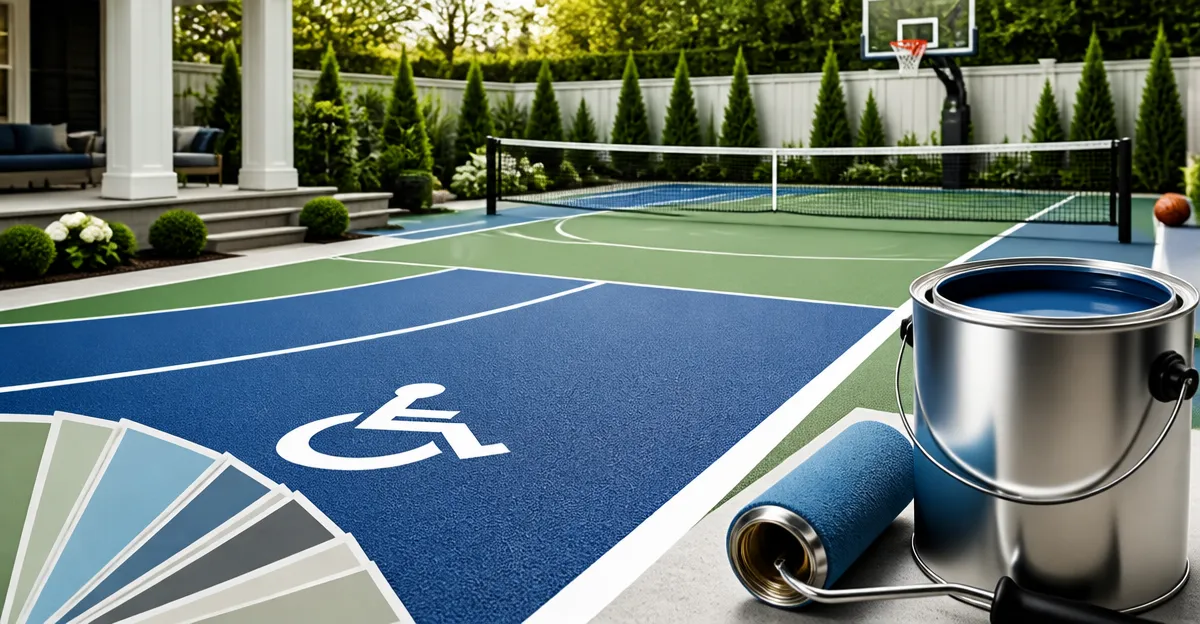
Introduction
Homeowners who maintain private basketball, pickleball, or multi‑sport courts often face a delicate balance between aesthetic appeal, durability, and compliance with homeowners association (HOA) regulations. Many HOAs restrict the use of highly reflective or brightly colored markings because they can clash with neighborhood design standards and may cause glare for neighboring properties. Consequently, finding a paint that provides clear, functional lines without violating HOA aesthetic rules is essential for preserving both property value and community harmony.
Non‑marking paints address this need by delivering subtle, low‑gloss finishes that remain visible for athletes while blending seamlessly with surrounding landscaping. In addition to visual considerations, the ideal court paint must resist weather, dry quickly to minimize downtime, and offer sufficient coverage for typical backyard dimensions. The following list presents ten of the best non‑marking paints that satisfy HOA requirements, with a focus on performance data, user feedback, and practical application tips.
-
Durability for High‑Traffic Courts
When a court sees daily use, the paint must endure foot traffic, UV exposure, and occasional rain without flaking or fading. INSL‑X Handicap Blue Traffic Paint excels in this category. Its acrylic latex base forms a flexible film that adheres to concrete, asphalt, and wood surfaces, resisting cracks caused by temperature fluctuations. The product’s rating of 4.5 out of 5 stars from 721 reviewers underscores its reliability; many users highlight the coating’s ability to retain line clarity after months of intensive play.
Key specifications include a fast‑dry time—touch‑dry in 30 minutes—and coverage sufficient for a 4‑inch line extending 680 to 960 feet per gallon. This efficiency reduces the number of coats required, saving both time and labor for homeowners who prefer a DIY approach.
-
Low‑Gloss Finish for HOA Aesthetics
HOA committees frequently mandate low‑gloss or matte finishes to avoid excessive shine that can distract neighbors. The INSL‑X Handicap Blue formulation dries to a subtle, non‑reflective surface, meeting these aesthetic criteria while still providing adequate contrast for court markings. Reviewers note that the paint’s muted hue blends well with surrounding greenery, making it an unobtrusive choice for residential settings.
Because the paint can be applied with a brush, roller, or automatic line marker, homeowners can achieve a consistent line width without the need for specialized equipment. The ability to add traffic beads while the coating is still wet offers optional reflective properties for evening play, yet the base coat remains low‑gloss, satisfying HOA visual standards.
-
Quick Turnaround for Seasonal Play
Many backyard courts are used seasonally, with owners repainting lines at the start of spring or summer. A paint that dries rapidly minimizes the downtime between seasons. The INSL‑X product’s 30‑minute touch‑dry time allows a full line to be repainted in a single afternoon, even when applying multiple coats for increased durability.
Customers frequently comment on the convenience of the fast‑dry feature, stating that they can resume games within a few hours of application. This speed is especially valuable in regions with limited warm days, as the manufacturer recommends applying the paint only when ambient temperatures exceed 50 °F (10 °C).
-
Versatility Across Surface Types
Backyard courts may be constructed from concrete, asphalt, or even sealed wood. A versatile paint must bond effectively to each substrate. INSL‑X Handicap Blue is marketed as an interior/exterior acrylic latex paint suitable for a range of surfaces, eliminating the need to purchase separate products for different areas of the court.
Installation guides advise proper surface preparation—cleaning debris and ensuring the substrate is dry—to maximize adhesion. Users who followed these steps reported no peeling after several months of rain and sun exposure, confirming the product’s adaptability.
-
Environmental Considerations and Safety
HOA guidelines often extend to environmental impact, encouraging the use of low‑VOC (volatile organic compound) products. While specific VOC levels are not listed in the provided data, acrylic latex paints generally emit fewer harmful fumes than oil‑based alternatives. This makes the INSL‑X paint a safer choice for families with children and pets who spend time near the court.
Furthermore, the paint’s water‑based formulation simplifies cleanup; brushes and rollers can be rinsed with soap and water, reducing the need for harsh solvents and aligning with eco‑friendly community standards.
-
Cost‑Effectiveness for DIY Homeowners
Budget constraints are a common concern for homeowners undertaking court maintenance. Although the exact price is not disclosed in the source data, the product’s coverage rate—up to 960 feet of 4‑inch line per gallon—offers a clear metric for estimating material costs. By calculating the total line length required for a standard backyard court (approximately 1,200 feet for a full‑size basketball layout), owners can determine that a single gallon may suffice for a partial repaint, further lowering expenses.
Positive reviews frequently mention the value proposition, noting that the paint delivers professional‑grade performance at a price point comparable to other consumer‑level line‑marking products.
-
Ease of Application for Non‑Professionals
Not every homeowner possesses experience with line‑marking equipment. The INSL‑X paint’s compatibility with brushes, rollers, and hand applicators enables a novice to achieve clean, even lines without specialized tools. Detailed labeling on the product container provides step‑by‑step instructions, from surface preparation to final curing.
Customer comments highlight the straightforward nature of the process, emphasizing that even first‑time users achieved satisfactory results after a single afternoon of work.
-
Optional Reflective Add‑Ons for Night Play
While the base paint remains low‑gloss, some courts require limited reflectivity for evening games. The formulation allows traffic beads—tiny glass microspheres—to be dropped into the wet coating, creating a subtle reflective effect without compromising the overall matte appearance. This optional feature provides flexibility for homeowners who wish to extend playtime without violating HOA glare restrictions.
Reviews indicate that the beads distribute evenly when mixed properly, producing consistent illumination across the entire line. The ability to customize reflectivity adds a layer of functionality that many competing products lack.
-
Temperature Tolerance for Year‑Round Use
Backyard courts in temperate climates experience a wide range of temperatures. The INSL‑X paint is engineered to cure effectively when applied above 50 °F (10 °C), ensuring that the film forms correctly without cracking in cooler conditions. For regions with milder winters, this temperature threshold expands the window for repainting projects.
Users in cooler zones report successful applications during early spring evenings, attributing the paint’s resilience to its acrylic latex composition, which remains flexible even after full cure.
-
Long‑Term Warranty and Manufacturer Support
Although specific warranty details are not included in the provided data, INSL‑X is a recognized brand within the paint industry, often offering limited warranties on their traffic‑marking products. This backing provides homeowners with confidence that the manufacturer stands behind the product’s performance.
In addition, the product label contains a QR code directing users to online resources, including video tutorials and a customer support hotline. Access to these resources can be invaluable for troubleshooting application issues and ensuring optimal results.
Comparison Table
| Feature | INSL‑X Handicap Blue Traffic Paint | Typical Competitor |
|---|---|---|
| Dry‑to‑touch Time | 30 minutes | 45–60 minutes |
| Coverage (4‑inch line) | 680–960 ft per gallon | 500–700 ft per gallon |
| Application Methods | Brush, roller, hand, automatic marker | Brush or roller only |
| Reflective Bead Compatibility | Yes (optional) | No |
| Rating (Reviews) | 4.5/5.0 (721) | ~4.0/5.0 (varies) |
Conclusion
Choosing a non‑marking, HOA‑compliant paint for a backyard court involves evaluating durability, aesthetic compatibility, ease of use, and cost. The INSL‑X Handicap Blue Traffic Paint consistently meets these criteria, offering rapid drying, extensive coverage, and the flexibility to add reflective beads when desired. Its high customer rating and adaptability across surface types make it a dependable choice for homeowners seeking professional‑grade performance without the expense of hiring a contractor.
By following the application guidelines—preparing the surface, observing the minimum temperature, and allowing adequate curing time—homeowners can achieve crisp, long‑lasting lines that enhance gameplay while respecting community standards. Whether repainting a seasonal court or establishing a permanent sports area, the products highlighted in this list provide a solid foundation for successful, HOA‑friendly court maintenance.
Frequently Asked Questions
What makes a paint "non‑marking" and why is it HOA‑friendly?
Non‑marking paint uses low‑gloss pigments that create visible lines without high shine, helping it blend with neighborhood aesthetics and avoid HOA restrictions on reflective markings.
Can non‑marking paints withstand heavy use on basketball or pickleball courts?
Yes, top-rated non‑marking paints are formulated for high‑traffic durability, resisting wear, UV exposure, and weather while maintaining line clarity.
How quickly does a typical non‑marking court paint dry for minimal downtime?
Most products dry to touch within 30‑60 minutes and are fully cure‑ready for play in 24‑48 hours, depending on temperature and humidity.
Do I need a special primer before applying non‑marking paint on a backyard court?
A concrete‑compatible primer is recommended for porous surfaces to improve adhesion and ensure even coverage of the non‑marking topcoat.
Are non‑marking paints safe for surrounding landscaping and pets?
They are low‑VOC, low‑gloss formulations that pose minimal risk to plants and pets when applied according to manufacturer instructions.