How to Follow a 12-Month Pickleball Paddle Progression Plan: Month-by-Month Training from Beginner to Advanced
Introduction
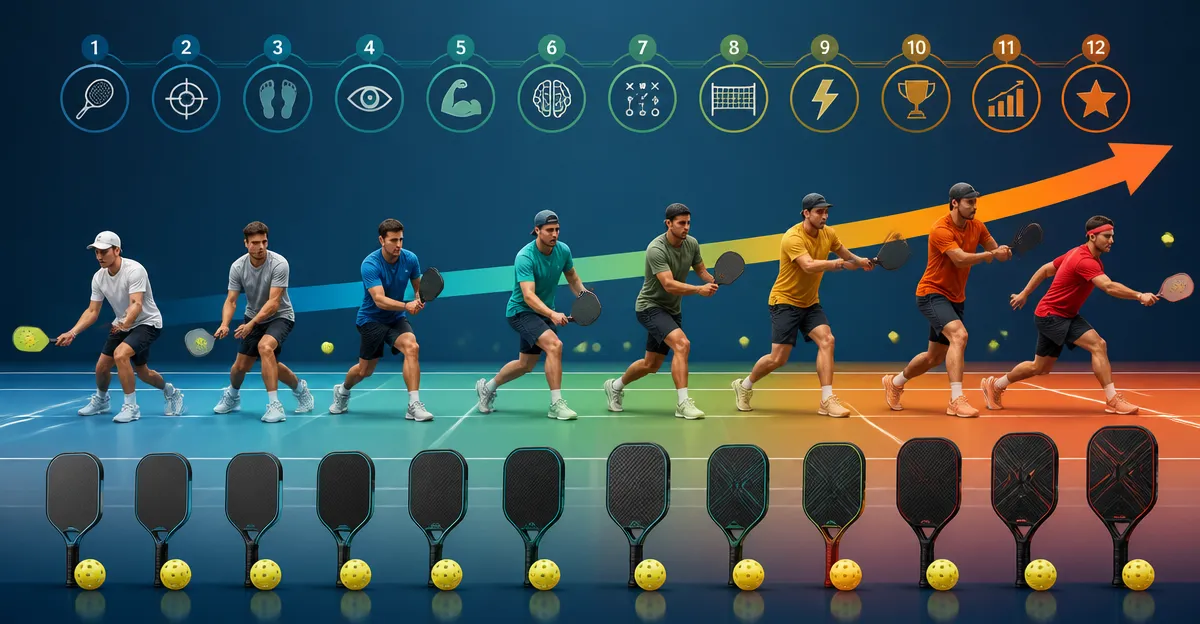
The reader will learn a systematic approach to improve technique, physical conditioning, and equipment selection over a full year. Each month introduces a focused objective that builds on the previous achievements, ensuring steady advancement without overwhelming the athlete. The guide emphasizes practical drills, measurable milestones, and the strategic use of recommended paddles to accelerate learning. By following this plan, one can transition from a casual beginner to a confident advanced competitor.
Progress in pickleball depends on three pillars: skill acquisition, muscular endurance, and equipment familiarity. Ignoring any pillar can stall development and increase injury risk. This guide integrates all three elements, providing clear actions and professional insight. The reader will emerge with a comprehensive skill set and a clear understanding of which paddle best supports each stage.
What You Will Need
- Outdoor or indoor pickleball court with standard net height.
- Comfortable athletic attire and supportive shoes.
- Water bottle and towel for hydration and sweat management.
- Training journal to record progress and reflections.
- Appropriate paddle for each phase, as described in the steps below.
Month 1: Fundamental Grip and Stance
During the first month the primary goal is to master the basic grip, ready position, and footwork. One should practice the continental grip for serves and the eastern grip for forehand drives, switching slowly to develop muscle memory. Simple shadow swings without a ball help reinforce the correct wrist angle and elbow alignment. The MTEN USAPA Fiberglass Pickleball Paddle Set provides a lightweight and affordable option for beginners, allowing longer practice sessions without fatigue.
Key features of the MTEN set include a fiberglass surface that offers reliable spin and a polypropylene honeycomb core that dampens vibration. At a price of $33.99 and a rating of 4.7/5.0 from 9,330 reviews, the paddles deliver excellent value for newcomers. The set includes two paddles, enabling practice with a partner or a backup in case of accidental damage. Using these paddles during the first month helps the player focus on technique rather than compensating for excessive weight.
Month 2: Consistent Serve and Return
The second month introduces serve mechanics and return strategies. One should aim to serve the ball at a height of 14 to 16 inches, using a smooth forward motion and a relaxed wrist. Repetitive serve drills, such as serving to each service box ten times, develop accuracy and confidence. Returning serves requires quick lateral movement and a compact swing to keep the ball low over the net.
Continuing with the MTEN paddles is advisable because their balanced weight of approximately 7.5 ounces facilitates quick hand speed. The USAPA approval ensures that the paddles meet tournament standards, allowing the player to transition to competitive play without equipment changes. Maintaining a practice log of serve percentages helps quantify improvement.
Month 3: Dink Control and Soft Game
In month three the emphasis shifts to the soft game, particularly the dink shot that dominates the non‑volley zone. One should practice short, controlled strokes that land just over the net, using a gentle wrist snap and a short follow‑through. Drills that involve alternating dinks with a partner across the kitchen improve timing and hand‑eye coordination.
The MTEN paddles remain suitable for dinking because the fiberglass face provides a smooth feel and the honeycomb core reduces unwanted vibration. Players who experience excessive sting during dinks may consider adding a neoprene grip sleeve, which can be purchased separately, to increase comfort.
Month 4: Baseline Power Development
Month four introduces baseline rallies to develop power without sacrificing control. One should work on a compact backswing and a firm wrist snap to generate speed while keeping the ball in the court. Practicing forehand and backhand drives from the baseline for three minutes each builds endurance and muscle memory.
At this stage the player may transition to the CRBN X Series Power Paddle for enhanced power. The carbon fiber face produces significant pop and an expanded sweet spot, which helps maintain consistency on powerful shots. Priced at $169.00 with a rating of 4.6/5.0 from 535 reviews, the paddle offers professional‑grade performance for a modest investment.
Month 5: Spin Mastery
Spin becomes a decisive factor in month five. One should experiment with brushing the ball on both forehand and backhand sides to create topspin and backspin. Drills that involve hitting the ball into a target zone while varying spin help the player understand how spin influences trajectory.
The CRBN paddle’s carbon fiber construction excels at generating spin because the textured surface grips the ball on impact. Its elongated unibody design ensures a stable platform, reducing flex that could diminish spin potential. The paddle’s weight range of 7.8‑8.1 ounces offers a balance between maneuverability and power, making it ideal for spin‑focused training.
Month 6: Advanced Footwork and Positioning
Effective footwork underpins every advanced skill. In month six the player should incorporate ladder drills, cone shuffles, and split‑step exercises into warm‑up routines. The goal is to develop quick, multidirectional movement that allows the player to arrive early for each shot.
Using the CRBN paddle during footwork drills reinforces the connection between paddle stability and body mechanics. The paddle’s unibody construction minimizes wobble when the player reaches for wide balls, fostering confidence in aggressive positioning. Recording video of footwork patterns can provide visual feedback for further refinement.
Month 7: Tactical Shot Selection
Month seven focuses on decision‑making during rallies. One should practice recognizing opponent positioning and selecting the optimal shot—whether a drive, drop, or lob. Simulated game scenarios where the player must choose a shot within three seconds improve mental acuity.
The CRBN paddle’s massive sweet spot reduces the penalty for slightly off‑center contact, allowing the player to execute tactical shots with greater reliability. Its protective neoprene cover, included with the paddle, safeguards the surface during intense practice, extending the paddle’s lifespan.
Month 8: Competitive Play and Scoring
Entering competitive play in month eight requires familiarity with official scoring and tournament etiquette. One should participate in local round‑robin events, focusing on applying the skills learned in previous months. Maintaining a calm demeanor and adhering to sportsmanship standards are essential for long‑term success.
Because the CRBN paddle is USAP‑approved, it meets all tournament regulations, eliminating the need for equipment changes when entering competition. Its combination of power, control, and durability makes it a reliable choice for match play.
Month 9: Strength and Conditioning
Physical conditioning becomes critical in month nine to sustain high‑level performance. A regimen that includes core strengthening, shoulder stability exercises, and lower‑body plyometrics supports the explosive movements required in pickleball. Sessions should be performed three times per week, with each workout lasting 45 minutes.
Using a paddle with a balanced weight distribution, such as the CRBN X Series Power Paddle, helps reinforce proper muscle activation during conditioning drills that involve paddle swings. The paddle’s ergonomic grip reduces strain on the wrist and forearm, lowering the risk of overuse injuries.
Month 10: Mental Toughness and Game Analysis
Month ten emphasizes mental resilience and post‑match analysis. One should develop a pre‑match routine that includes visualization of successful shots and controlled breathing to manage nerves. After each match, reviewing statistics such as unforced errors and winning percentages highlights areas for improvement.
The CRBN paddle’s consistent feel aids in maintaining confidence during high‑pressure points, as the player can rely on predictable feedback from each strike. Pairing the paddle with a high‑quality eraser, sold separately, keeps the surface free of debris that could affect ball contact during critical moments.
Month 11: Advanced Strategies and Shot Variation
In month eleven the player refines advanced strategies such as third‑shot drops, drive‑and‑volley combinations, and defensive resets. Drills that simulate opponent responses to each strategy help the player internalize the appropriate timing and execution.
The CRBN paddle’s elongated unibody design provides a stable platform for rapid shot transitions, allowing the player to execute drive‑and‑volley sequences without compromising control. Its carbon fiber face ensures that even low‑impact defensive resets retain a crisp feel.
Month 12: Mastery Assessment and Future Planning
The final month serves as a comprehensive assessment of progress. One should schedule a full match against a higher‑rated opponent, recording performance metrics across all skill categories. Comparing these metrics to the baseline data collected in month one quantifies overall improvement.
At this stage the player may choose to continue with the CRBN paddle for elite competition or explore other specialized models for niche play styles. Setting new goals, such as entering regional tournaments or coaching beginners, ensures continued growth beyond the twelve‑month timeline.
Tips & Pro Tips
- Maintain a consistent practice schedule; irregular sessions impede skill retention.
- Warm up with dynamic stretches to prevent muscle strains, especially before power‑intensive drills.
- Periodically inspect paddle edges for wear; replace foam‑injected edges if they become loose.
- Use a paddle cover when transporting equipment to protect the carbon fiber surface from scratches.
- Record video of each month’s drills to visually track technique evolution.
Troubleshooting
If the player experiences excessive wrist fatigue, verify that the grip circumference matches the hand size; the CRBN paddle offers a 4.25‑inch grip circumference, which suits most adult players. Adjusting grip size with an overgrip can alleviate discomfort.
Should spin generation feel inconsistent, ensure that the paddle face is clean and free of debris; a simple wipe with a damp cloth restores optimal friction. Additionally, practice brushing the ball with a relaxed wrist to avoid over‑rotation.
Conclusion
The twelve‑month progression plan provides a structured pathway from beginner fundamentals to advanced competitive play. By following the month‑by‑month objectives, incorporating targeted drills, and using the recommended paddles, one can achieve measurable improvement in skill, conditioning, and confidence.
Continued dedication beyond the program, coupled with periodic reassessment, will sustain growth and keep the player engaged with the evolving sport of pickleball.
Products Mentioned in This Guide
Frequently Asked Questions
What is the main goal of a 12‑month pickleball paddle progression plan?
It provides a structured, month‑by‑month roadmap to develop skill, endurance, and equipment familiarity so beginners can become advanced players in a year.
How frequently should I train each month in the progression plan?
Aim for 3‑4 sessions per week, mixing skill drills, conditioning, and paddle-specific practice as outlined for that month.
How do I choose the right paddle for each stage of the plan?
Start with a lightweight, control‑oriented paddle as a beginner, then transition to mid‑weight power paddles in the middle months, and finish with a balanced or power‑focused paddle for advanced play.
What key drills should I focus on during the skill acquisition months?
Practice serve‑return combos, dinking drills, and third‑shot drops, gradually adding footwork patterns and target zones each month.
How can I prevent injuries while following the year‑long progression?
Incorporate dynamic warm‑ups, strength‑training for the forearm and core, and allow rest days; increase intensity gradually according to the plan’s milestones.