How Pickleball Swing Analytics Differ for Seniors: A Practical Guide to Age‑Specific Metrics and Training
Introduction
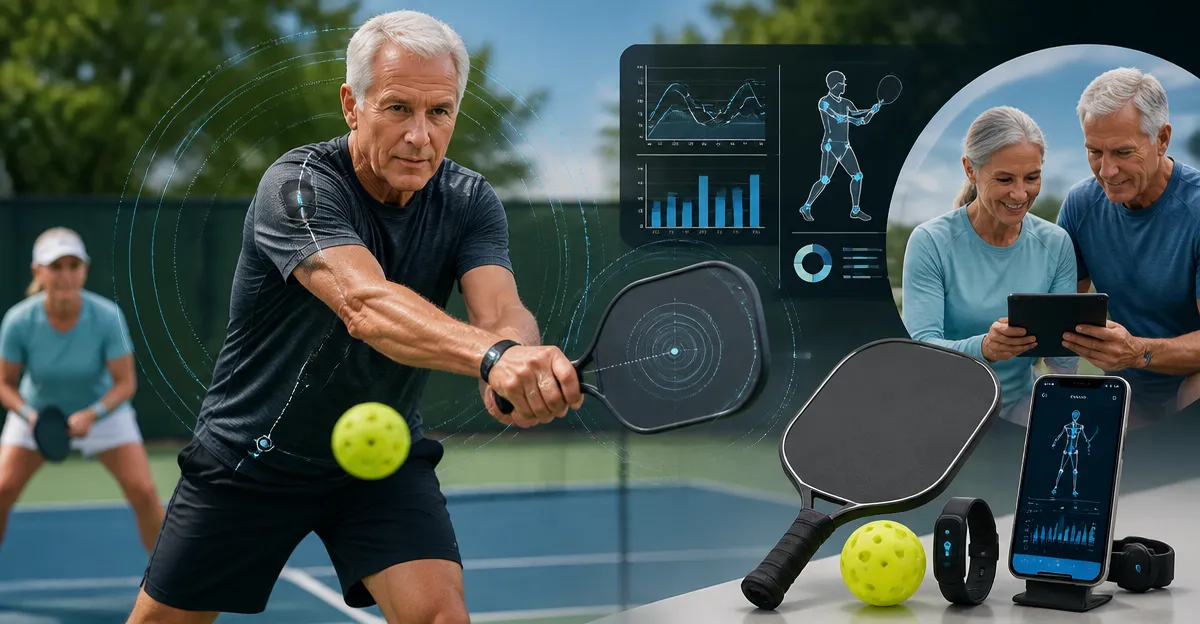
Pickleball has become one of the fastest‑growing sports worldwide, attracting players of every age group. For senior athletes, the game offers a low‑impact way to stay active, yet the biomechanics of a swing change with age. This guide explains how swing analytics are adapted for seniors, outlines the metrics that matter most, and provides actionable training strategies. Readers will discover which tools and resources can support age‑appropriate improvement, and they will learn how to evaluate products that complement their training routine.
By the end of the article, senior players will understand the key performance indicators that differ from younger competitors, know how to interpret data from wearable sensors or video analysis, and be equipped with product recommendations that enhance skill development while respecting the body’s natural limits.
Background / Context
Traditional swing analytics focus on raw speed, angular velocity, and power output—metrics that correlate strongly with performance in high‑intensity athletes. As the body ages, muscle mass declines, joint flexibility reduces, and recovery times lengthen. Consequently, senior players benefit from a shifted emphasis toward efficiency, consistency, and injury prevention. Understanding these physiological changes is essential before interpreting any data.
Key concepts include:
- Stroke Efficiency: The ratio of ball speed to paddle speed, indicating how much energy is transferred.
- Joint Load: Measured in Newton‑meters, this metric helps identify excessive stress on the shoulder, elbow, and wrist.
- Consistency Index: The standard deviation of swing angles across multiple hits, reflecting repeatability.
- Recovery Time: The interval needed for heart rate to return to baseline after a rally, a proxy for cardiovascular strain.
When seniors track these variables, they can tailor practice sessions to improve technique without overexertion. Modern devices—ranging from smartphone apps to dedicated wearable sensors—capture the data needed for informed adjustments.
Understanding Swing Metrics for Seniors
Senior athletes should prioritize metrics that highlight smooth, repeatable motion rather than raw power. Stroke efficiency, for example, reveals whether a player is using proper body mechanics to generate ball speed. A high efficiency score often correlates with reduced joint load, which is critical for preventing tendinitis or rotator‑cuff injuries.
Joint load monitoring is particularly valuable because older muscles and tendons recover more slowly. Devices that provide real‑time feedback on shoulder rotation can alert a player when they exceed safe thresholds, prompting an immediate correction.
Consistency is another cornerstone. By measuring the variation in swing angle across ten consecutive serves, seniors can identify subtle timing issues that may lead to missed shots or unnecessary strain.
Finally, recovery time offers insight into overall cardiovascular health. A shorter recovery interval after a series of rallies indicates improved endurance, which supports longer play sessions without fatigue.
Age‑Specific Training Tools and Techniques
Integrating analytics into training requires tools that are both accurate and user‑friendly for older adults. Two paperback guides stand out for their clear explanations and senior‑friendly approaches.
The first recommendation is Pickleball Made Simple. Authored by Blake Foster, this book breaks down fundamentals, fitness routines, and mental strategies in language that senior players find accessible. It includes a chapter on low‑impact conditioning, which aligns directly with the efficiency and joint‑load metrics discussed earlier. At $14.99, the book holds a 4.7‑star rating from 123 reviewers, indicating broad satisfaction.
The second guide, How to Play Pickleball, focuses on beginner techniques, equipment selection, and rule comprehension. Hall Camper’s concise format makes it ideal for seniors who are new to the sport and need a solid foundation before delving into advanced analytics. Priced at $6.99 with a perfect 5‑star rating from two reviewers, it offers excellent value for those seeking a quick start.
Beyond books, wearable sensors such as the Polar H10 Heart Rate Monitor or the Garmin Vivosmart 5 can capture recovery time and heart‑rate variability. When paired with video analysis apps like Coach’s Eye, seniors can overlay swing angles onto footage, directly visualizing consistency scores.
Practical drills that reinforce the metrics include:
- Shadow swings focusing on a smooth, controlled motion to improve efficiency.
- Targeted serve drills where the player records three consecutive serves and reviews the angle variance.
- Short‑interval cardio bursts (e.g., 30‑second footwork drills) followed by heart‑rate monitoring to gauge recovery.
Integrating Analytics into Daily Practice
To make data actionable, seniors should adopt a structured routine that blends analytics with skill work. A typical weekly plan might consist of two technical sessions, one conditioning day, and one recovery review.
During technical sessions, players record their swings using a tripod‑mounted smartphone. After each set of ten strokes, they pause to review the Consistency Index displayed by the analysis app. Adjustments—such as a slightly wider grip or a slower backswing—are made immediately, reinforcing motor learning.
Conditioning days prioritize low‑impact exercises like resistance‑band rows, wall sits, and gentle yoga. The Polar H10 can track heart‑rate zones, ensuring the workout stays within a safe intensity range for senior participants.
Finally, a recovery review day involves comparing the Recovery Time metric from the previous week. If the interval has decreased, the player can safely increase rally length; if not, additional rest or a lighter conditioning load is advisable.
Comparison / Selection Guide
| Feature | Pickleball Made Simple | How to Play Pickleball |
|---|---|---|
| Target Audience | Intermediate to senior players seeking fitness integration | Absolute beginners and newcomers |
| Price | $14.99 | $6.99 |
| Rating | 4.7/5 (123 reviews) | 5/5 (2 reviews) |
| Key Content | Fitness routines, mental game, age‑specific swing tips | Rules, equipment basics, fundamental strokes |
| Format | Paperback | Paperback |
For seniors who already possess basic knowledge and wish to refine swing analytics, Pickleball Made Simple offers the depth required. Those just beginning should start with How to Play Pickleball to build a solid foundation before introducing data‑driven training.
Best Practices & Tips
- Start with a Baseline: Record a week of swings without any intervention to establish personal metrics.
- Focus on Efficiency First: Aim for a stroke efficiency above 0.65 before chasing higher ball speeds.
- Limit Joint Load: Keep shoulder rotation below 150 Nm during serves; adjust grip or stance if thresholds are exceeded.
- Use Incremental Progression: Increase rally length by 5‑10% each week, guided by recovery‑time data.
- Schedule Rest Days: Older athletes need at least one full rest day after high‑intensity conditioning.
- Leverage Visual Feedback: Review video clips side‑by‑side with swing‑angle overlays to spot inconsistencies.
- Combine Education with Practice: Read the recommended books alongside on‑court drills to reinforce concepts.
Frequently Asked Questions
1. Do I need expensive equipment to track swing analytics?
No. Many smartphones coupled with free video‑analysis apps provide sufficient data for senior players. Wearable heart‑rate monitors add valuable recovery insights without a large financial outlay.
2. How often should I measure my swing metrics?
Measure at the start of each week and after any significant change in training intensity. This frequency balances data relevance with the time constraints of senior lifestyles.
3. Can analytics help prevent injuries?
Yes. By monitoring joint load and consistency, players can identify harmful patterns early and adjust technique before pain develops.
4. Is there a specific paddle recommended for seniors?
Paddles with a larger sweet spot and a slightly heavier weight (around 7.5‑8 oz) reduce the need for perfect timing, thereby lowering joint stress.
5. How do I interpret a low Consistency Index?
A low score indicates high variability in swing angle. Focus on a slower, deliberate backswing and practice shadow swings to improve repeatability.
6. Should I combine analytics with group lessons?
Group lessons provide social motivation, while analytics deliver personalized feedback. The combination yields the most comprehensive improvement.
7. What is the ideal recovery time for seniors?
Recovery to 50 % of peak heart rate within 60‑90 seconds is typical for healthy seniors. Faster recovery suggests good cardiovascular conditioning.
Conclusion
Senior pickleball players can achieve meaningful performance gains by focusing on age‑appropriate swing analytics. Prioritizing efficiency, joint load, consistency, and recovery time creates a balanced training framework that respects the body’s natural changes. By integrating the recommended books, simple wearable technology, and structured practice routines, seniors can enjoy longer, healthier play while minimizing injury risk.
Remember that analytics are a tool, not a replacement for enjoyment. Use data to guide incremental improvements, celebrate progress, and stay engaged with the vibrant pickleball community.
Products Featured in This Guide
Pickleball Made Simple
Price: $14.99
Rating: 4.7/5 (123 reviews)
Featured because it provides senior‑focused fitness routines and swing‑efficiency strategies that align with the analytics discussed.
How to Play Pickleball
Price: $6.99
Rating: 5/5 (2 reviews)
Featured because it offers clear, beginner‑level instruction that prepares new senior players for data‑driven improvement.