Introduction
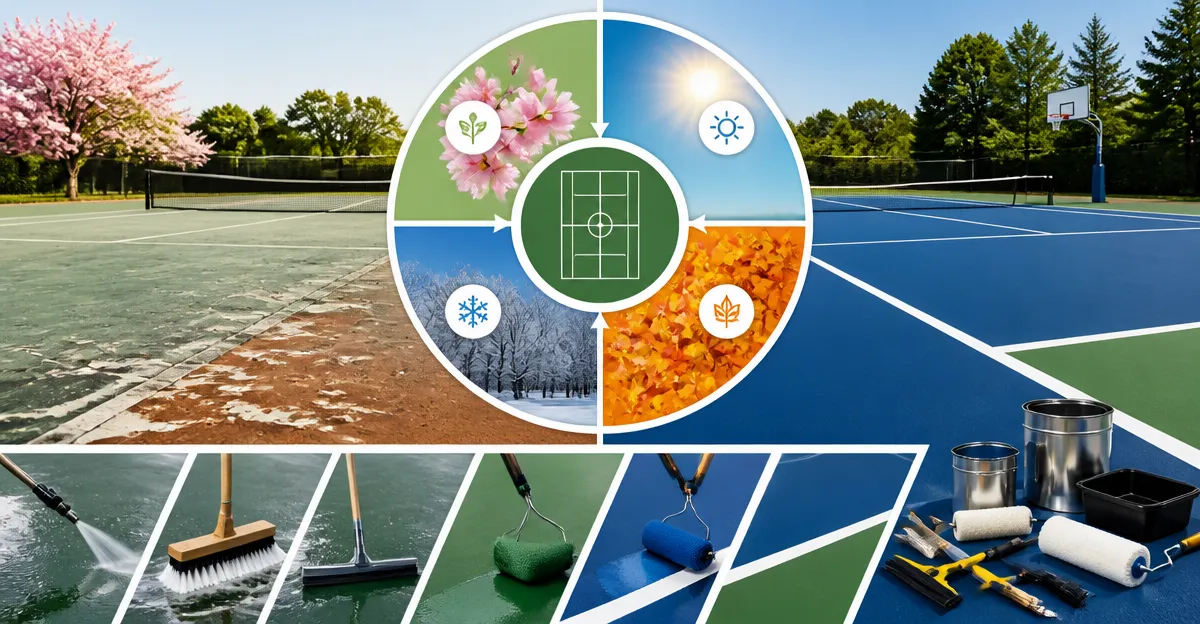
Maintaining a sports court surface ensures player safety, visual clarity, and long‑term cost efficiency. This guide explains how to create a seasonal maintenance calendar that distinguishes between spring touch‑up work and full acrylic resurfacing. Readers will learn when to clean, repair, and repaint, as well as why certain products outperform generic alternatives. By following the outlined steps, one can extend the life of a court by years while preserving its professional appearance.
What You'll Need
- Rust-Oleum AF1600 Field Paint – 12‑can pack, water‑based, fast drying.
- Aervoe 215 White Marking Spray – temporary chalk for layout lines.
- Pressure washer or garden hose with a soft‑brush attachment.
- Concrete patching compound and a trowel.
- Paint roller frame with ¾‑inch nap roller cover.
- Protective gloves, goggles, and a respirator mask.
- Clean rags, mild detergent, and a bucket of water.
Step 1: Clean the Surface Thoroughly
Begin each season by removing dust, debris, and organic growth that can interfere with paint adhesion. Use a pressure washer on a low‑pressure setting to avoid etching the concrete, and follow with a mop soaked in a mild detergent solution. Allow the surface to dry completely; residual moisture will cause the acrylic paint to lift or blister. For temporary layout lines before repainting, the Aervoe 215 White Marking Spray provides a non‑permanent guide that wipes away with soap and water within ten minutes, preventing permanent markings during the cleaning phase.
Step 2: Inspect and Repair Cracks, Holes, and Spalls
After cleaning, walk the entire court and note any cracks wider than ¼ inch, holes, or spalling concrete. Use a concrete patching compound, pressing it into the defect with a trowel to achieve a smooth, level surface. Allow the patch to cure according to the manufacturer’s instructions, typically 24 hours for thin layers. Proper repair before painting ensures that the new acrylic coating will not seep into gaps, which would otherwise lead to premature peeling.
Step 3: Apply a Primer If the Surface Is Porous
Older courts often exhibit high porosity, absorbing paint unevenly and resulting in patchy coloration. Applying a compatible primer creates a uniform base and improves the bond strength of the topcoat. Use a water‑based primer designed for concrete, applying it with a roller in thin, even coats. Let the primer dry for at least one hour before proceeding to the next step. While primers add an extra cost, they reduce the amount of field paint required and extend the life of the finish.
Step 4: Apply Spring Acrylic Paint Using Rust‑Oleum AF1600 Field Paint
For spring maintenance, many facilities opt for a light touch‑up rather than a full resurfacing. The Rust‑Oleum AF1600 Field Paint is specifically engineered for athletic surfaces, offering bold, non‑clogging spray cans that can be used upside‑down for precise line work. Each 17‑ounce can covers up to 200 linear feet at three inches wide and dries to the touch within 30 minutes, allowing multiple passes in a single day. Follow these sub‑steps:
- Shake each can vigorously for one minute to ensure pigment suspension.
- Attach the Rust‑Oleum Athletic Field Striping Machine (model #206346) or the compatible striping wand (model #2388000) for consistent line width.
- Mark the layout with the temporary Aervoe 215 White Marking Spray if adjustments are needed before permanent paint.
- Spray the paint in smooth, overlapping strokes, maintaining a distance of 12‑18 inches from the surface.
- Allow each stripe to dry for 30 minutes before applying adjacent lines to prevent smudging.
The product’s water‑based formula is safe for grass, turf, concrete, pavement, and gravel, making it versatile for mixed‑surface courts. Its long‑lasting resistance to weather and wear reduces the frequency of future touch‑ups, justifying the $119.88 price for the 12‑can pack with a 4.8‑star rating from six verified reviews.
Step 5: Allow Full Curing Before Use
Although the paint feels dry after 30 minutes, full curing requires 24‑48 hours depending on humidity and temperature. During this period, restrict foot traffic and avoid exposure to rain or direct sunlight, which can cause surface tackiness. Use a hygrometer to monitor ambient moisture; ideal curing conditions are 50‑70 % relative humidity and temperatures between 60‑80 °F. Proper curing prevents premature wear and ensures the color remains vibrant throughout the season.
Step 6: Apply a Protective Topcoat (Optional for High‑Traffic Courts)
Facilities with heavy usage, such as basketball or tennis courts, may benefit from a clear acrylic topcoat that adds an extra barrier against abrasion. Select a topcoat compatible with the Rust‑Oleum AF1600 system, applying it with a roller in a thin, even layer. Allow the topcoat to dry for at least two hours before reopening the court. While this step adds cost, it can extend the interval between full resurfacing projects by up to two years.
Tips & Pro Tips
- Schedule spring maintenance after the last frost but before the peak usage period to minimize downtime.
- Test paint adhesion on a small, inconspicuous area before committing to the entire surface.
- Maintain consistent spray pressure when using Rust‑Oleum AF1600 to avoid uneven line thickness.
- Store unused spray cans upright in a cool, dry place; temperature extremes can affect nozzle performance.
- Use the Aervoe 215 White Marking Spray for temporary layout lines on grass surrounding the court; it evaporates without leaving residue.
- Document each maintenance session with photos and a log; this data supports budgeting for future resurfacing.
Troubleshooting
Problem: Paint runs or streaks appear after spraying.
Solution: Reduce the distance between the nozzle and surface, and move the spray wand at a steady speed. If runs persist, clean the nozzle with warm soapy water to remove any dried pigment that may cause blockage.
Problem: Paint lifts after a light rain.
Solution: Verify that the curing time was sufficient before exposure to moisture. Re‑apply a thin coat to the affected area once the surface is completely dry.
Conclusion
By following this seasonal maintenance calendar, one can keep a court looking professional and safe throughout the year. Spring touch‑ups using Rust‑Oleum AF1600 Field Paint provide quick, bold line restoration, while occasional acrylic topcoats protect high‑traffic surfaces. The combination of proper cleaning, timely repairs, and the right tools—such as Aervoe 215 White Marking Spray for layout—ensures a durable finish that reduces long‑term costs. Implement these practices, record results, and enjoy a consistently high‑performance playing surface.
Products Mentioned in This Guide
Frequently Asked Questions
When should I perform spring touch‑up maintenance versus a full acrylic resurfacing?
Do light cleaning, line repairs, and spot‑painting in early spring; schedule a full acrylic resurfacing in late spring after temperatures consistently stay above 50°F.
What are the key tools needed for court paint maintenance?
A pressure washer or hose with soft brush, concrete patching compound, ¾‑inch nap roller, protective gear, and the recommended Rust‑Oleum AF1600 paint and Aervoe 215 spray.
How often should I clean a sports court to prevent paint degradation?
Clean the surface at least twice a year—once in spring and once in fall—to remove debris and prevent moisture‑related damage.
Why is Rust‑Oleum AF1600 preferred over generic field paints?
It’s water‑based, fast‑drying, and formulated for high traffic courts, offering better adhesion and UV resistance than many generic alternatives.
What safety precautions are essential when repainting a court?
Wear gloves, goggles, and a respirator mask, ensure proper ventilation, and keep the area free of by‑standers during spraying and drying.