Introduction
The market for pre‑owned kayak paddles has expanded as paddlers seek high performance at lower cost. This guide explains how to determine the monetary value of used, refurbished, and factory‑seconds paddles, while providing a practical calculator for quick assessments. Readers will learn the key factors that influence price, how to compare different construction materials, and which products offer the best balance of durability and performance. By the end of the article, one will be equipped to make confident purchasing decisions and negotiate fair prices.
Background and Context
Kayak paddles are typically categorized by shaft material, blade composition, and adjustability features. Carbon fiber shafts provide exceptional stiffness and low weight, while aluminum shafts deliver corrosion resistance and affordability. Blade technology ranges from fiberglass‑reinforced polypropylene to fully composite designs that float and resist wear. Understanding these technical distinctions is essential for evaluating a paddle that has been previously owned or labeled as a factory‑second.
Factory‑seconds are paddles that did not meet the manufacturer’s quality standards due to minor cosmetic defects or packaging errors, yet they function identically to first‑quality units. Refurbished paddles have been restored by the seller, often including new grips or blade resurfacing. Used paddles may show wear from regular use, such as minor scratches or worn grip tape, which can affect resale value. The following sections outline a systematic approach to appraise each category.
Key Valuation Concepts
Three primary concepts drive the valuation of a kayak paddle: material premium, condition grading, and market demand. Material premium reflects the inherent cost advantage of carbon fiber versus aluminum or alloy shafts. Condition grading assigns a numeric score based on visual inspection, functional testing, and any repairs performed. Market demand considers seasonal trends, regional popularity of specific paddle lengths, and the presence of compatible kayak models.
To apply these concepts, one can use a weighted formula: Value = Base Price × Material Factor × Condition Factor × Demand Factor. The Base Price represents the current retail price of an equivalent new paddle. Material Factor ranges from 0.70 for basic aluminum to 1.20 for premium carbon fiber. Condition Factor ranges from 0.50 for heavily worn units to 0.95 for like‑new condition. Demand Factor fluctuates between 0.90 and 1.10 depending on seasonal sales data.
Recommended Products and Their Value Contributions
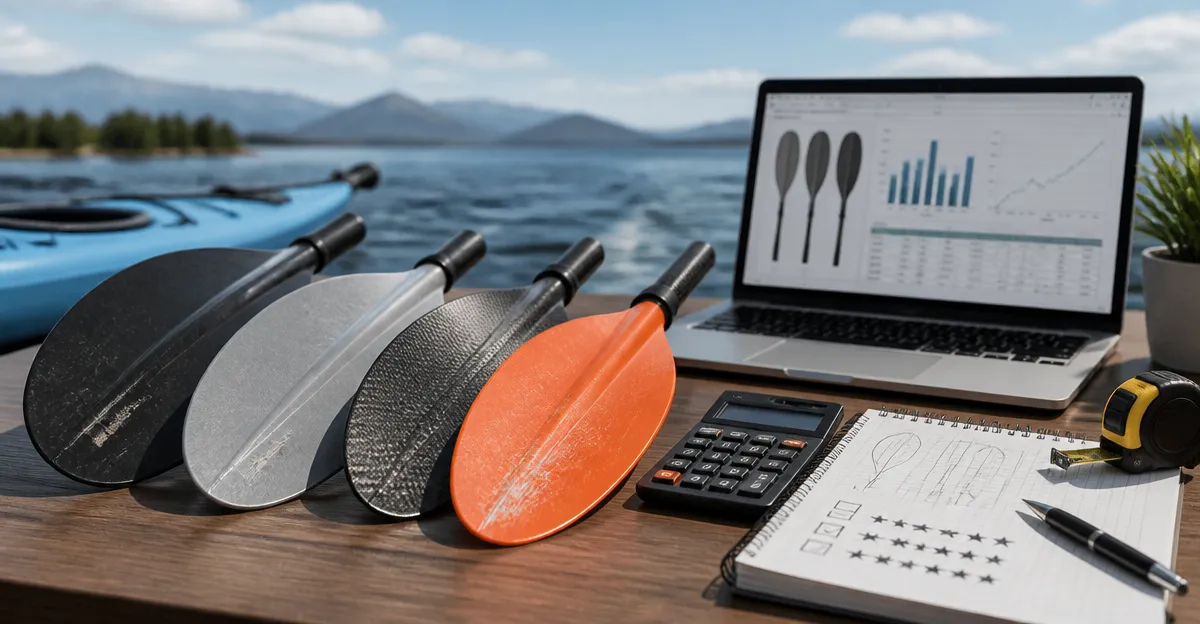
When evaluating a paddle, it is helpful to reference benchmark models that illustrate the extremes of performance and price. The first benchmark is the WONITAGO Carbon Fiber Paddle. This paddle features a premium carbon fiber shaft, fiberglass‑reinforced polypropylene blades, and a 3‑piece adjustable design that spans 94‑102 inches. At $79.99 with a 4.4‑star rating from 392 reviews, it represents a high‑end option whose material factor is approximately 1.20.
The second benchmark is the Pelican Poseidon Angler Paddle. Constructed with an aluminum shaft and reinforced fiberglass blades, this model weighs less than 2 kg and includes a built‑in hook retrieval system. Priced at $64.99 and rated 4.6 stars by 2,670 reviewers, it offers a solid mid‑range material factor of roughly 0.90.
The third benchmark is the OCEANBROAD Alloy Paddle. Its anodized aluminum shaft provides saltwater resistance, while the adjustable feathering angles improve efficiency. With a price of $31.99 and a 4.8‑star rating from 727 reviews, it serves as a budget‑friendly reference point with a material factor near 0.70.
The final benchmark is the Perception Hi‑Life SUP/Kayak Paddle. This convertible paddle features a three‑piece aluminum shaft, symmetric SUP blade, and quick‑adjust length system. It sells for $109.99 and enjoys a 4.6‑star rating from 277 reviews, placing it in the premium segment for convertible paddles with a material factor of about 1.10.
Comparison and Selection Guide
| Feature | WONITAGO Carbon Fiber | Pelican Poseidon Angler | OCEANBROAD Alloy | Perception Hi‑Life |
|---|---|---|---|---|
| Shaft Material | Carbon Fiber | Aluminum | Anodized Aluminum | Aluminum |
| Blade Composition | Fiberglass + PP | Fiberglass Reinforced PP | Aluminum Blade | Symmetric SUP Blade |
| Adjustable Length | 94‑102 in (20 cm range) | 94.5 in (fixed) | 90.5 in (0°/60° feather) | 215‑230 cm (74‑80 in) |
| Weight | 2.2 lb (1.0 kg) | ~2.5 lb | ~2.8 lb | ~3 lb |
| Price | $79.99 | $64.99 | $31.99 | $109.99 |
To select the appropriate paddle for a specific use case, consider the following decision matrix. If maximum speed and minimal fatigue are paramount, the carbon‑fiber WONITAGO model delivers the highest stiffness‑to‑weight ratio. For anglers who require an integrated hook retrieval system, the Pelican Poseidon Angler offers functional advantages at a moderate price. Budget‑conscious paddlers who need a reliable, corrosion‑resistant shaft should look to the OCEANBROAD Alloy Paddle. Finally, paddlers who alternate between kayaking and stand‑up paddleboarding will benefit most from the convertible Perception Hi‑Life design.
Best Practices & Tips
- Inspect the shaft for micro‑cracks or delamination, especially in carbon fiber models; any structural compromise reduces the material factor.
- Verify that the blade floats; a non‑floating blade indicates water absorption and may signal hidden damage.
- Test the locking mechanism on multi‑piece paddles; loose pins can cause sudden failure under load.
- Check for original manufacturer markings on the shaft and blade; missing logos often indicate a factory‑second.
- When purchasing refurbished units, request documentation of the refurbishment process, including any replaced components.
Frequently Asked Questions
1. How does a factory‑second differ from a used paddle?
A factory‑second is a brand‑new paddle that failed quality control for minor cosmetic reasons, whereas a used paddle has been operated by a previous owner and may exhibit wear.
2. Is it safe to buy a carbon‑fiber paddle that has been repaired?
Carbon‑fiber repairs are possible, but they must be performed by a qualified technician using proper epoxy resin; otherwise, the structural integrity may be compromised.
3. What length should a paddler choose for a 240 cm kayak?
General guidelines suggest a paddle length 10‑15 cm longer than the kayak length; for a 240 cm kayak, a paddle between 250‑255 cm (98‑100 in) is optimal.
4. Do feathered blades improve performance on calm water?
Feathered blades reduce wind resistance and can improve efficiency on windy days, but on calm water the performance gain is modest.
5. How often should one replace a paddle that is used weekly?
With regular weekly use, a high‑quality paddle typically lasts 3‑5 years; signs of wear such as blade erosion or shaft fatigue indicate it is time for replacement.
Conclusion
Valuing used, refurbished, and factory‑seconds kayak paddles requires a systematic approach that accounts for material premium, condition, and market demand. By applying the weighted formula and referencing benchmark models such as the WONITAGO Carbon Fiber Paddle, Pelican Poseidon Angler Paddle, OCEANBROAD Alloy Paddle, and Perception Hi‑Life SUP/Kayak Paddle, one can arrive at a fair market price. The best practice recommendations and FAQ section further empower paddlers to make informed decisions and maintain optimal performance on the water.
Products Featured in This Guide
WONITAGO Carbon Fiber Paddle
Price: $79.99 | Rating: 4.4/5 (392 reviews)
Featured for its premium carbon fiber shaft, adjustable 94‑102 in length, and lightweight design that exemplifies high‑end performance.
Pelican Poseidon Angler Paddle
Price: $64.99 | Rating: 4.6/5 (2,670 reviews)
Featured for its integrated hook retrieval system, durable aluminum shaft, and angler‑focused features that add functional value.
OCEANBROAD Alloy Paddle
Price: $31.99 | Rating: 4.8/5 (727 reviews)
Featured for its budget‑friendly price, anodized aluminum shaft, and adjustable feathering angles that provide efficiency for casual paddlers.
Perception Hi‑Life SUP/Kayak Paddle
Price: $109.99 | Rating: 4.6/5 (277 reviews)
Featured for its convertible three‑piece design, allowing seamless transition between kayak and SUP configurations.